
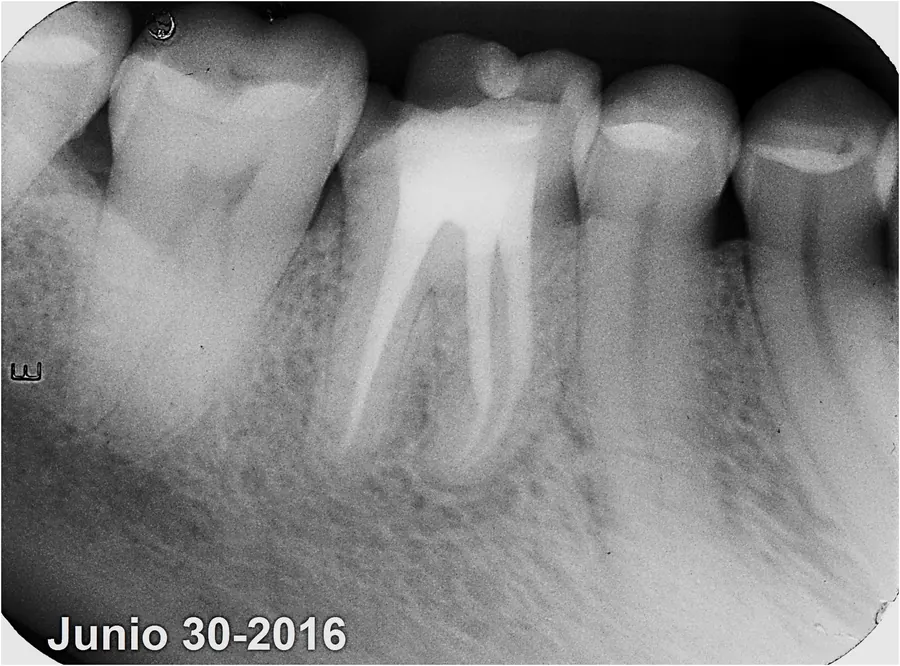
This lecture analyses the review by Gulabivala and Ng (International Endodontic Journal, 2023) on the factors that affect root canal treatment and retreatment outcomes.
In short: every protocol pursues the same goal: controlling infection in the canals. The procedural factor that matters most is how close cleaning and filling get to the end of the canal, without going past it.
Main conclusions
- Extrusion of filling material delays or prevents periapical healing.
- However effective the protocol, the complex apical anatomy stays infected. The interaction between that residual infection and the patient's defences continues after treatment.
- Many variables play a part: the patient (local, systemic and social factors), the disease, the operator and the number of steps.
Dr. Cortés Torres's comments
- Are we going backwards? He recalls that 36 years ago Sjögren et al. (1990) already reported over 96% success in cases without periapical radiolucency and 86% apical healing in necrosis with radiolucency.
- "Critical territory": what is now called apical canal complexity, James Simon named this way in 1994.
- Cognitive dissonance: he draws on Festinger to explain why we defend beliefs even when facing evidence.